Common drain jetting problems
- ✓ Heavy grease in kitchen lines
- ✓ Scale on older pipe walls
- ✓ Silt and compacted debris
- ✓ Root fragments left after cutting
- ✓ Private drainage such as septic tanks

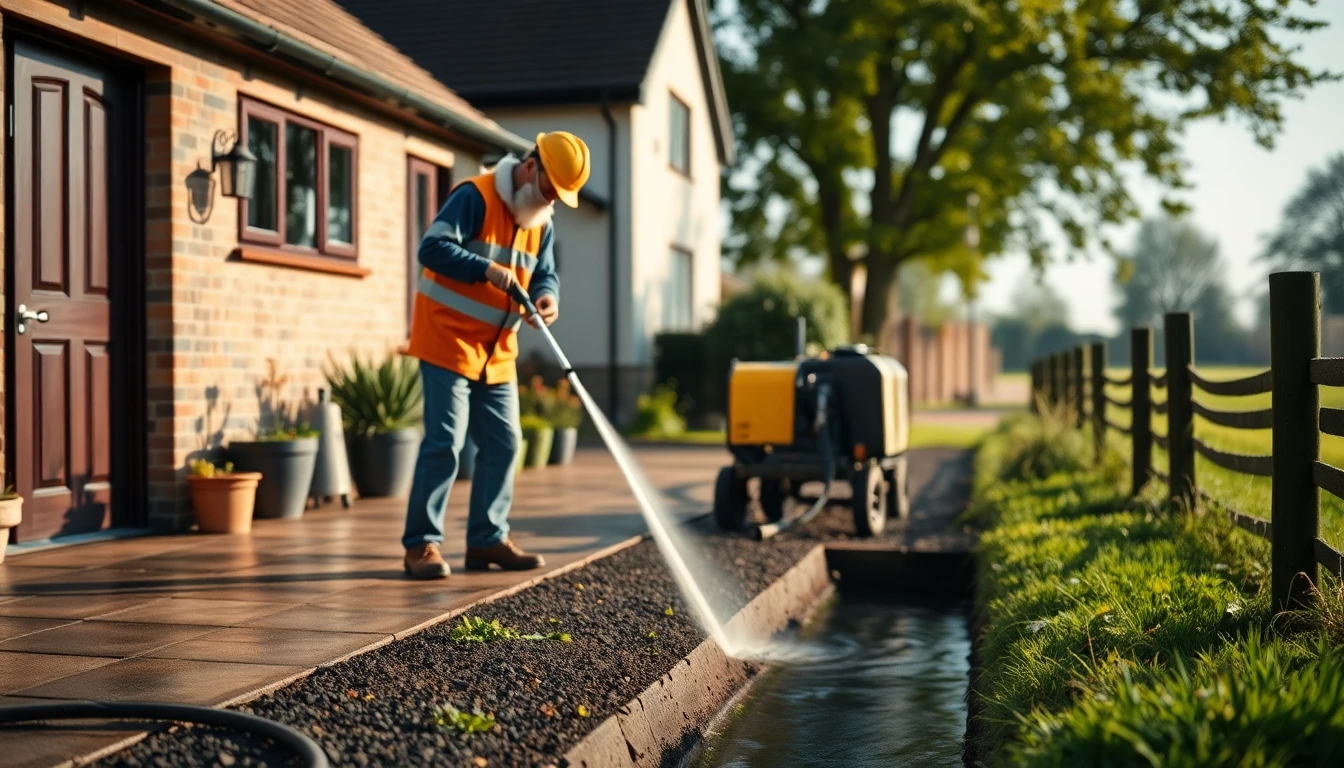
Drain jetting uses a high-pressure water stream to scour the inside of a pipe, while a rotating nozzle breaks up grease, scale and silt, then flushes it towards the sewer. It cleans the whole pipe wall, not just a hole through the blockage.
Kelvedon is a village on the River Blackwater between Colchester and Witham. It lies on the old Roman road from London to Colchester. Because of those Roman roots, the underground services can be complex.
Jetting suits repeat blockages and greasy kitchen lines. It also helps where scale narrows older pipes. However, the plumber sets the pressure to match the pipe, because weak or damaged pipes need a gentler approach. A short camera check shows which approach fits.
Homes on the village edge may have long drain runs to a tank or soakaway. Jetting cleans the pipe, but it does not repair a broken one. A camera pass afterwards shows if any fault remains.
Homes near a river may notice slower drains when water levels are high. Older cottages may have clay pipes, while newer homes often use plastic. Some rural homes may rely on septic tanks or package treatment plants.
Our drain jetting service page explains each method and when it suits. For the whole area, see drainage services in Kelvedon. Nearby, Colchester drainage services follow the same approach. Because faults often overlap, emergency drain services in Kelvedon may help too.
Yes, if the plumber matches the pressure to older clay. Septic tank and soakaway runs get a lighter touch, while a camera pass shows the result.
Not always, because some rural properties can rely on private drainage such as septic tanks and package treatment plants. Say which type you have when you make your enquiry.